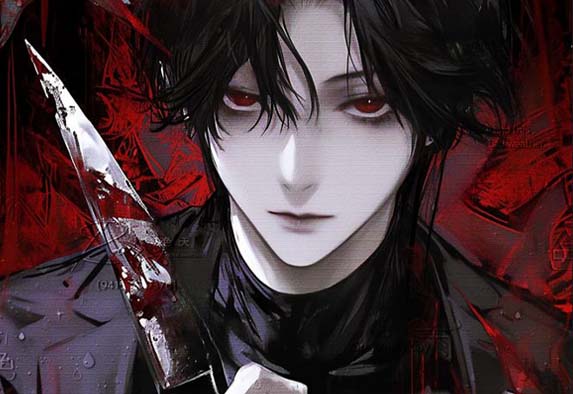
Chapter 20.1: “Wu Heng, you’re so much like a snake”
Zeng Like wiped the corner of her mouth in a fluster with her sleeve. “Do you think Mom’s a little kid? Drooling like that!”
She turned and hurried back into the bedroom. Her movements stirred the air around Wu Shiming and Wu Zhi; Wu Zhi lowered her head, looking troubled and sad, while Wu Shiming wrinkled his nose sharply—what was that delicious smell?
The man followed his wife back into the room, leaving their children staring wide-eyed at each other in the living room.
“Big Brother…” Wu Zhi clutched the two ears of her cloth doll helplessly.
Her doll was a 10-inch monkey that Wu Heng had bought her two years ago at Happy Valley in Hanzhou, because her zodiac sign was the monkey. Whenever she was at home, she always carried this monkey in her arms. No one could ever take it from her—except Wu Heng.
Wu Heng crouched down in front of her and lifted his eyes to hers. “Wu Zhi, do you want to go out?”
Wu Zhi loved her brother’s eyes most, and feared them the most. She wanted to look, yet didn’t dare. “Go out where?”
“I don’t know. Probably to places more interesting than home, but also more dangerous.” Wu Heng didn’t bother to explain. If Wu Zhi chose to stay at home and become food for Wu Shiming and Zeng Like, that would lift a burden off his shoulders.
“Because there’s no food at home, so we need to go out, right?” Wu Zhi asked carefully.
Seeing that Wu Heng didn’t respond, Wu Zhi tightened her hold on the doll. “Wherever big brother goes, I’ll go too.”
“What about them?” Wu Heng glanced toward the master bedroom.
“Dad and Mom have been acting weird since this morning. They stayed in the bedroom all day without coming out, and ate up all the food in the house…”
Wu Heng drew his gaze back and looked at her face again. “You haven’t eaten anything all day?”
Wu Zhi shook her head.
The boy said nothing. Instead, he got up and went back to his room. He pulled open the wardrobe, intending to take out the packs of crispy noodles Wu Zhi had brought earlier. But what he saw was only a wardrobe in complete disarray, clothes thrown everywhere—those dozen packs of noodles had vanished without a trace.
Behind him, Wu Zhi watched her brother’s back with hopeful eyes.
After a long silence, Wu Heng slowly pushed the wardrobe shut and turned around. “You’ll have to go hungry for a couple of days.”
Wu Zhi’s lips pressed into a pout. Hugging her doll against her stomach as if it could muffle the growling inside, she turned to head back to her room and starve quietly.
But Wu Heng stopped her.
“Wu Zhi, you’ll sleep in my room tonight.”
At once, the little girl forgot all about her hunger. Clutching the doll tightly, she jumped onto Wu Heng’s bed.
Wu Heng kicked off his shoes, pulled a quilt from the top shelf of the wardrobe, and spread it on the floor.
His room was small. To make room for a pallet on the floor, he had to shove the desk and chair against the wall. Even then, the space could barely fit one person lying down. And though Wu Heng was thin, his frame was long, all bones stretched out lean and slender—he was hardly a small boy.
Before sleeping, the strangeness of Zeng Like’s behavior that night stirred memories of his childhood.
He was four years old when Wu Zhi was born. Wu Heng would crouch by the cradle where the baby lay, endlessly imagining what his little sister would be like when she grew up.
When Wu Zhi started kindergarten, the two of them got into a fight over some trivial thing. Wu Zhi fell, hitting the back of her head against the coffee table. Blood gushed out. Wu Shiming and Zeng Like rushed her to the hospital in a panic, but the diagnosis was devastating—her brain had suffered irreversible damage. Her learning ability, language system, memory system… none of them would ever develop normally again.
When they returned home, Wu Shiming nearly beat Wu Heng to death with a belt, Zeng Like trailing behind him with the barely conscious Wu Zhi in her arms.
Wu Heng thought he deserved to die. It was his fault that Wu Zhi was hurt. From then on, even when Wu Shiming beat him lightly every three days and heavily every five, Wu Heng accepted it all as punishment he was meant to bear.
Outside of studying, he treated Wu Zhi with double the care. If it were possible, he would have gladly traded his own life for her health.
Until the year he was about to graduate from elementary school, on Dragon Boat Festival. Wu Heng was napping in his room when Wu Shiming and Zeng Like completely forgot he was home. Out in the living room, they were chatting openly with their siblings about child-rearing.
Wu Heng stood silently behind the door, his face still marked with scabs that hadn’t yet healed.
From their words, he learned the truth about Wu Zhi’s brain damage.
The truth was—it had nothing to do with him. Wu Zhi’s defect had already existed in Zeng Like’s womb.
Wu Shiming said: “If we hadn’t done this, how could the siblings have ended up so close?”
Zeng Like said: “Exactly. As her father and I grow older, Wu Heng will only get smarter. A child like that—too sharp-minded—we wouldn’t be able to handle him. That’s why we had to start while he was very young, to reshape him completely. Just look at him now, how good he is to Wu Zhi.”
Wu Shiming: “I can guarantee, in this world, no one will ever hold the place in Wu Heng’s heart that Wu Zhi does—not me, not her mother, not even the partner he’ll have in the future.”
After that Dragon Boat Festival, Wu Heng grew withdrawn. At home, he could go days without speaking a single word. Even while eating, he made no sound at all—like a housefly perched on the dinner table.
He had once tried to imagine killing Wu Zhi—whether with rat poison or pesticide, by pushing her into a lake or off a Ferris wheel. Countless ways of killing her flashed through his mind. But not once did he ever carry them out.
Because it had nothing to do with Wu Zhi. She was not at fault.
Wu Zhi had always been his little sister. But from that Dragon Boat Festival onward, Wu Shiming and Zeng Like were no longer his parents.
And as for those two monsters outside the bedroom door—they were even less so.
—
At dawn.
Knock, knock.
“Xiao Heng?”
Outside the door, the woman knocked and then pressed her ear tightly against the panel, her eyes staring blankly ahead.
The door suddenly opened. Zeng Like’s head snapped to the side, and the exaggeratedly warm smile froze stiff on her face.
Wu Zhi stood before her, clutching her doll.
“Xiao Zhi, why are you sleeping in your brother’s room?” Zeng Like smoothed her hair twice and asked.
Still upset about being scolded by her mother the night before, Wu Zhi looked off to the side. “Don’t worry about it, okay?”
Zeng Like’s gaze dropped, catching sight of the boy sleeping on the floor. Saliva pooled rapidly in her mouth—she nearly raised her hand to smack Wu Zhi aside and lunge at him, but she couldn’t bear to.
Her eyes brimmed with unwilling hunger. “Go back to bed. It’s still early.”
After Wu Zhi climbed back into bed, Wu Heng slowly opened his eyes and sat up.
Facing him, Wu Zhi’s wide eyes blinked. “Brother, Mommy smells stinky.”
Expressionless, Wu Heng said, “Then make sure to stay away from her.”
“Oh.”
“And stay away from Dad, too.”
“Does Daddy smell stinky as well?”
“Go smell for yourself.” Wu Heng stood, folded up the quilt neatly, and placed it back in the wardrobe.
Then he went downstairs to Lin Mengzhi’s house to make breakfast.
In the yard, two zombies happened to be wandering about, sniffing the air. Their heads were covered in a thick crust of yellow-white pus, which dripped down along their exposed jawbones.
The boy picked up the knife from the shoe cabinet. Like a dark phantom, he darted toward the first zombie. Before it could even open its mouth, his blade slid straight into the foul-smelling maw, the tip piercing out through the back of its skull.
As for the other one—a vine, green and ghostly, had appeared from the morning mist at some point. It slithered like a serpent, coiling around the zombie’s head. The wrapping looked almost gentle, but within it, the skull was crushed into a pulp.
“Disgusting.” Wu Heng remarked flatly.
A few vines flung the zombie corpses out of the yard.
Wu Heng lowered his head, lost in thought.
His gaze settled on the vegetable seedlings Grandma Lin had planted just before the apocalypse. Now the seedlings were gone without a trace, leaving only patches of bare soil.
The vines, having finished tossing the bodies, turned the soil upside down before retreating, dust-covered, back into the boy’s body.
On the short walk of two or three meters back into the house, Wu Heng reflected—he’d almost forgotten. It wasn’t just zombies and mutated plants and animals he had to deal with. There were always people, too.
Lin Mengzhi was still in deep sleep. His skin looked even darker than the day before. He was no longer sweating, but his body temperature had only grown hotter. When Wu Heng went to check, the blanket beneath him was burning so fiercely that black smoke was rising.
Choked by the smoke, Wu Heng coughed. Several vines reached out, lifted Lin Mengzhi from the bed, and dropped him onto the floor. Then they smothered the flames that had almost erupted.
By now, Wu Heng was nearly certain Lin Mengzhi’s ability had to do with fire. Before, when he’d been drenched in sweat, Wu Heng had thought it was steam.
“Lin Mengzhi still lazing about?” Grandma Lin sat at the dining table. Hearing only one set of footsteps, she asked irritably.
Wu Heng grunted an acknowledgment. “I left him breakfast. You go ahead and eat.”
The old woman and the boy sat across from each other, sharing breakfast.
In front of her was a bowl of noodles sprinkled with scallions and drizzled with sesame oil, with two fried eggs laid neatly on top. At her right hand was even a small dish of pickled cucumber shreds.
In front of Wu Heng, however, was only a basket of fruit already starting to wilt.
Bored, he sat with her and kept her company, planning to go outside later to eat what he really wanted.
“A’Heng,” Grandma Lin suddenly spoke up, “don’t go out later. Didn’t you and Mengzhi always love the pork belly with preserved mustard greens I make? I’ve got time now—I’ll cook it for you two.”
“…” Biting into a fragrant pear, Wu Heng gave a quiet reply. “Okay.”
Although Lin Mengzhi was a decent cook, there were always certain dishes—those that relied on true authenticity and long-practiced skill—that he could never quite master. At home, all the pickled, cured, and dried vegetables came from Grandma Lin’s hands.
“Do we still have any pork belly?” she asked.
“There are two pieces left, about three catties in total,” Wu Heng replied, head lowered as he quietly gnawed through one pear after another.
After the meal, Wu Heng stayed at home to prepare the ingredients Grandma Lin needed, though he himself lounged on the sofa, leisurely flipping through a book. In the kitchen, the ones lending her a hand were the vines slipping out from his body.
“Salt. Get me the salt.”
One vine rummaged through the jars and bottles, dragged out the salt container, set it by Grandma Lin’s hand, then gave it a tap to signal it was there.
The old woman, blind to what was happening around her, never noticed anything amiss. Meanwhile, the kitchen was nearly packed full of frantic vines—thick and thin, some covered with spiky hairs like thorns, others smooth and bare. They crowded around the old woman, tangled into a mass like a den of snakes.
But when she lit the stove, they all quickly drew back, many of them slipping right back to the boy’s side to coil at rest.
Once several bowls of pork belly with preserved greens were steaming, Grandma Lin came out of the kitchen. “A’Heng, keep an eye on it. When it’s done, turn off the fire. I need another nap. And if Mengzhi’s still lazing about when I wake up, just wait—I’ll give him a good thrashing with my cane…” She muttered as she shuffled off to her room.
Wu Heng’s hunger gnawed at him, but he still waited until the pork belly was fully cooked before turning off the fire. Then, with his bag on his back and knife in hand, he slipped out quietly.
The neighborhood lay in deathly silence. In truth, most people should still have been at home, yet the breath of life grew thinner with each passing day.
—
X had flown ahead to scout the area. It was growing rapidly—in both body and mind.
The downy fuzz of a hatchling had nearly all fallen away in the past few days, replaced by layer upon layer of stiff adult feathers. Its wingspan had already doubled, once barely twenty centimeters, now when its shadow flickered past, it truly resembled the little hawk Wu Heng had mistaken it for at the very beginning.
The parrot flew back, but it didn’t land. It circled above Wu Heng’s head, croaking, “Eat something.”
Then it veered off in a certain direction.
Wu Heng slid his knife back into the sheath strapped to his thigh and sprinted forward, following the parrot’s flight path.
The streets were crawling with starving zombies, so of course the boy didn’t take the main roads. Instead, he chose the winding footpaths hidden within residential complexes.
The complexes connected but didn’t interlink; walls and tall fences cut them apart. The landscaping, once neatly maintained, had become wild and overgrown, blotting out the sky. On these narrow paths lurked not only the occasional zombie, but also plants that launched sudden attacks.
Amid a cluster of peach trees stood towering cacti, inconspicuous at first. The moment they caught the sound of his pounding footsteps, their bodies shivered, releasing a rain of needles that tore through the air with a shrill hiss, all aimed at Wu Heng.
His reflexes were far quicker and sharper than when he had been merely human. He rolled several times across the ground, vines coiling into a shield that absorbed the barrage.
He raised his head, eyes sharp. The vine-wall at his side was riddled with holes, the needles having pierced but not fully broken through. Yet the cacti were already gearing up for a second strike.
Without hesitation, Wu Heng grabbed the fence beside him and vaulted over it in one swift motion. The vines trailing after him whipped violently, trying to shake loose the embedded spines.
Even as he moved, his thoughts didn’t stop. Images flashed of the poppy’s vines being punctured. By the logic of survival—the strong growing ever stronger—power at its peak should have no weaknesses at all.
But clearly, his bird, his vines, and himself—they were nothing but weaknesses.
The poppy could sense his thoughts. As if to prove itself, it went berserk, thrashing at the plants on both sides of the path. Leaves and branches burst apart, cascading down like a storm of petals over Wu Heng’s head.
“…”
When he saw X, Wu Heng stopped. He steadied his breathing, his voice hoarse:
“You’re madness, not strength.”
The vines drew back until only a single tendril remained, curling pitifully on his shoulder.
Wu Heng’s hunger was souring his mood. He didn’t comfort it—he simply walked straight toward X.
The bird was crouched by the gates of a kindergarten. Once a place full of noise and life, now it was deathly silent. The cartoon figures painted on either side of the main gate leaned crookedly, one toppling to the side. The side door and the security booth had collapsed for reasons unknown, and the square before the entrance was already buried under a thick layer of fallen leaves.
Wu Heng stepped forward and drew his knife.
X flew over and landed on his shoulder. “Eat something,” it said, nudging his head with its beak.
Boy, bird, and flower—each of them starving, clawed raw with hunger.
But Wu Heng had not yet lost himself to it. His steps were deliberate, unhurried. The silence around them was too deep, and not a single zombie was in sight.
Even now, no news had come of rescue or cleanup. No troops, no aid. The city was still waiting—for nothing. The city was still hell.
Wu Heng entered the school grounds. To his left, a magnolia tree loomed—its crown thick with leaves, its trunk two or three times taller and broader than before, its blossoms more numerous, more vividly colored than ever.
He skirted around the tree and passed the playground. On his left stretched a patch of sand, dotted with a slide and a castle—places once made for children to play.
Wu Heng crouched at the edge of the sandpit.
On the surface were the remnants of adult shoeprints, broken and scattered. Heavy drag marks scarred the sand—whatever had been dragged was alive, thrashing and fighting, gouging the ground into uneven ridges, deep and shallow, large and small. All pulling one way.
But the tracks weren’t only of that kind. There was another as well: broad, uniform, sinuous trails winding across the sand.
Wu Heng narrowed his eyes. Even without thinking, he could tell the marks most likely belonged to some legless creature crawling past.
“You mean the prey you found is a bug?” he asked the bird on his shoulder, testing.
X tapped its left foot once, then its right.
Yes—and no.
But the vine curled on his other shoulder suddenly jerked upright. Wu Heng turned his head, but before he could make out what was sliding toward him at speed, the green tendril lashed around his body and hurled him far away.
He hit the ground hard, scrambled up fast, and crouched low, staring at the creature that had nearly ambushed him from behind.
The sand trickled back down. The blurred shadow slowly came into focus—what emerged was a massive serpent, as thick around as a water vat!
It coiled its body like a moving mountain. From the tip of its triangular head gleamed a pair of narrow, dark-red pupils, fixing on the human before it. Every time its blackened-red tongue flicked out, the armored scales along its body shivered faintly in rhythm.
Wu Heng gripped his knife. Against that monster, the blade in his hand was hardly more than a sewing needle.
No wonder the kindergarten and its surroundings were so unnaturally quiet—it had become a snake’s den.
“This is the prey you found?” the boy muttered, watching as the black bulk lowered its front half to the ground and slid leftward, clearly preparing to strike.
X had already fled to the top of the magnolia tree.
Wu Heng, for once, cursed under his breath—“damn bird.” He rose to his feet, only to find the serpent had already wound its body into a seamless circle, enclosing him inside.